Healthcare
VR Resilient: A Revolutionary Tool for Burnout Prevention
22. 5. 2024

Healthcare 1. 10. 2024
Revolutionary Burn Therapy Using Virtual and Augmented Reality
Burn treatment and subsequent rehabilitation are not only physically demanding but also mentally exhausting for patients. Traditional methods often fail to sufficiently alleviate the pain and psychological distress associated with such trauma. The AI-Enhanced VR/AR Therapy project introduces an innovative solution that combines Virtual and Augmented Reality (VR/AR) with Artificial Intelligence (AI) to create personalized therapy that is more effective, less painful, and more patient-friendly.
AI-Powered Personalized Therapy
Artificial Intelligence analyzes patient responses and adapts therapeutic scenarios to their individual needs. This ensures that every patient receives a tailored therapy session that optimizes the entire healing process.
Virtual Reality as an Escape from Pain
Specially designed VR environments help patients focus on pleasant stimuli, thereby reducing pain perception. Clinical studies show that the use of VR can reduce pain during burn treatment by up to 40%.
Augmented Reality for More Effective Rehabilitation
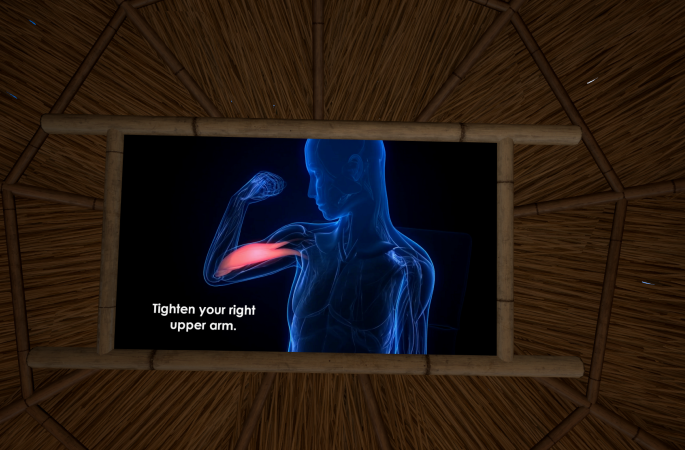
AR technology enables patients to interactively practice movements and restore motor skills in a natural environment, accelerating their return to daily life.
Real-Time Analysis & Feedback
The system collects data on patient movement, stress levels, and pain, allowing clinicians to monitor progress and adjust therapy for maximum effectiveness.
More Effective Treatment: The integration of AI and VR/AR sets a new standard in burn therapy that is faster and less invasive than traditional methods.
Less Pain, Fewer Medications: Thanks to the VR distraction effect, the consumption of analgesics is reduced, leading to fewer side effects and a faster recovery.
Environmental Impact: Reducing the need for medication and extensive physical rehabilitation leads to a lower carbon footprint and more efficient resource management within the healthcare system.
Collaboration with Experts: The project is developed in collaboration with the Second Faculty of Medicine at Charles University, ensuring an evidence-based approach and high-quality implementation.
The AI-Enhanced VR/AR Therapy project represents a new milestone in digital therapeutics, enabling patients to undergo treatment with reduced pain, greater comfort, and superior outcomes. This innovative approach has the potential to become a standard not only in burn care but also in other medical fields, such as neurological rehabilitation or chronic pain management.
Project Title: AI-Enhanced VR/AR Therapy – A New Dimension in Burn Treatment
Programme Name: Operational Programme Technologies and Applications for Competitiveness (OP TAC)
Call Name: Proof of Concept – Activity b) – Call II
Project Number: CZ.01.01.01/08/23_036/0005174
Project Schedule: September 1, 2024 – June 30, 2026
The objective of the project is to develop and verify an innovative VR/AR therapeutic solution enhanced by AI for burn treatment. The project promises not only more effective treatment of the physical consequences of burns but also support for the psychosocial reintegration of patients, which is critical for their holistic recovery and return to daily life.
As part of the project, a comprehensive verification and validation of the therapeutic solution (a software application prototype) will be conducted. This includes technical feasibility, the psychological aspects of utilizing VR and AR in therapy, and the possibilities of AI-driven treatment personalization. Emphasis will be placed on investigating the benefits of this new approach for patients, including the reduction of pain and anxiety, and the overall improvement in quality of life.